Educational quiz app · Ages 5-10
This is what learning looks like


Educational quiz app · Ages 5-10
This is what learning looks like
No nagging required. Keep the learning going after the worksheet, with every question read aloud and Owee guiding each step.
Scan with your phone camera
- Family-friendly
- No ads
- Private
Geography · Matching and colouring worksheet
Countries and Capitals of Europe: Free KS2 Geography Worksheet
This free printable worksheet helps children in Years 5 and 6 build their locational knowledge of Europe. Six countries on the map are numbered. Children work out which country each number sits on, write its name and its capital city using a word bank, then colour the countries in.
The activity works as a starter, a homework task or a revision sheet. Because children have to find each country by its shape and position, not just recall a list, it shows quickly whether they can picture where these places sit in relation to the United Kingdom.
What your child is learning
‘locate the world’s countries, using maps to focus on Europe (including the location of Russia) and North and South America, concentrating on their environmental regions, key physical and human characteristics, countries, and major cities’
Key stage 2 Geography: Locational knowledge, National Curriculum in England. Source and licence
Countries and Capitals of Europe
Free Geography worksheet · Ages 9 to 11
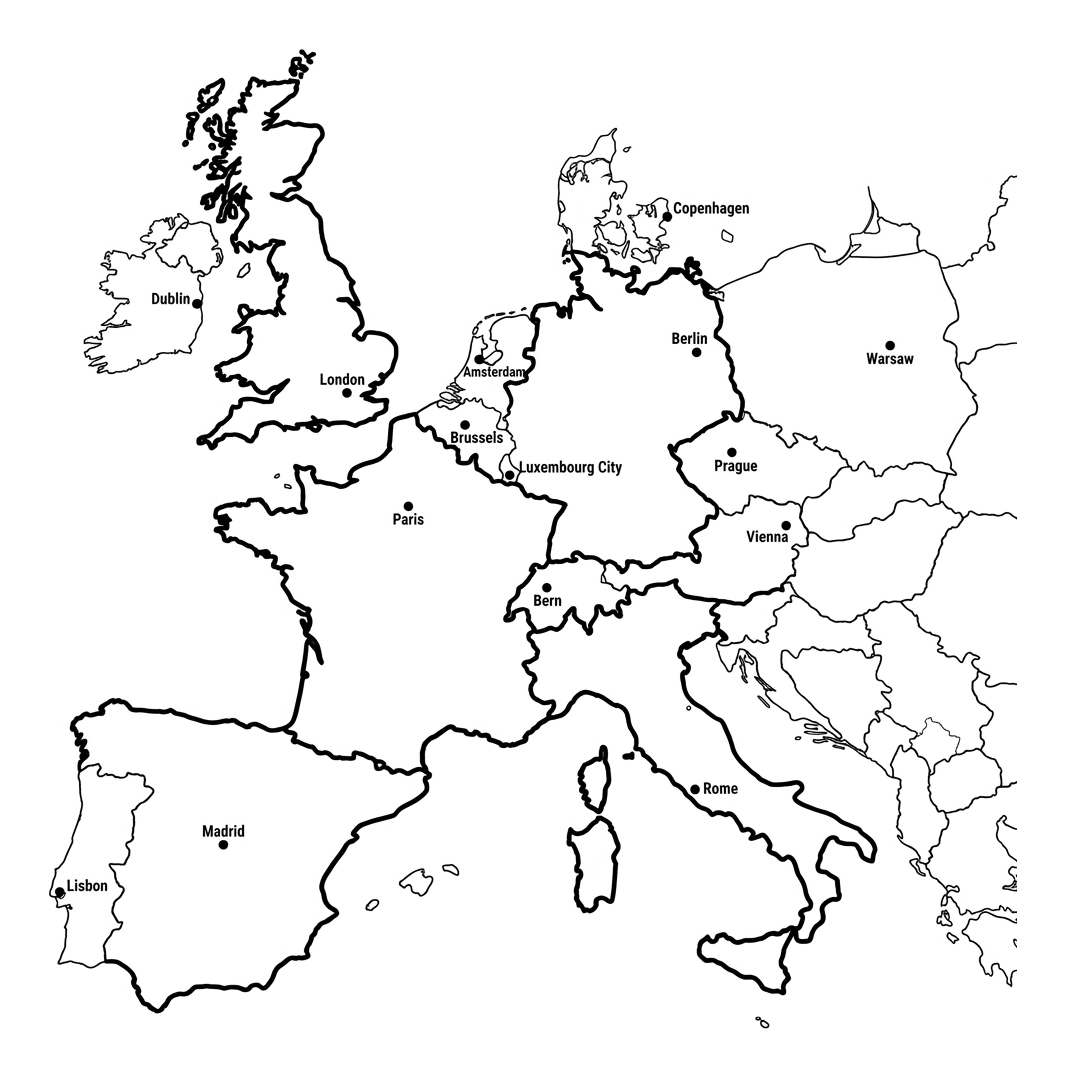
Match the country to its capital city
Each number is on a country. Write the country’s name and its capital city, like this: United Kingdom – London. Use the word bank.
- 1
- 2
- 3
- 4
- 5
- 6
Colour the map of Europe
Colour each numbered country a different colour. Stay inside the borders. Colour the sea blue.
 Countries and Capitals of EuropeSheet 161
Answers: Countries and Capitals of Europe
Sheet 161
- 1. France – Paris
- 2. Spain – Madrid
- 3. Italy – Rome
- 4. Germany – Berlin
- 5. Poland – Warsaw
- 6. Ireland – Dublin
For grown-ups. Free worksheets and the Owee quiz app at owee.world
Answer key
- 1. France – Paris
- 2. Spain – Madrid
- 3. Italy – Rome
- 4. Germany – Berlin
- 5. Poland – Warsaw
- 6. Ireland – Dublin
What this worksheet covers
Six countries are numbered on the map: France, Spain, Italy, Germany, Poland and Ireland. Children write each country and its capital (Paris, Madrid, Rome, Berlin, Warsaw and Dublin) on the matching line. The word bank lists all twelve names, so the task checks map knowledge rather than spelling. The capital cities are shown as dots, with their names in small print. Those names are tiny once the sheet is printed, so children should rely on the shapes: Italy's boot, the square-ish outline of Spain and Portugal, and Ireland as the island beside Great Britain. The colouring task then fixes the six countries in place.
How to use it at home or in the classroom
At school, the matching task makes a tidy ten-minute starter or a low-stakes assessment of prior learning before a wider unit on Europe. Pair it with a class atlas or wall map so children can check their answers and self-correct. At home, parents and carers can turn it into a conversation: which of these cities have you heard of, and why? Has anyone in the family been to one of them? For the colouring, suggest a different colour for each country and encourage children to keep within the borders. Children who finish quickly can name extra countries on the map, such as Portugal, the Netherlands, Belgium, Switzerland, Austria or the Czech Republic, and find their capitals in an atlas. Switzerland is a good one to check: its capital is Bern, not the bigger cities of Zurich or Geneva.
Building locational knowledge in KS2
In Key Stage 2, the National Curriculum expects children to locate the world's countries with a focus on Europe, including the location of Russia, and to identify environmental regions, key physical and human characteristics, countries and major cities. This sheet supports that aim by combining naming with placing. A common mix-up is the United Kingdom and Ireland: Ireland is a separate country with Dublin as its capital, while Northern Ireland, in the north-east of the same island, is part of the UK. On this map Northern Ireland has a thin border like the rest of the island, so point it out before your child colours the UK. Returning to the same map over several lessons, adding a few new countries, seas or cities each time, helps the picture stick.
Extending the learning
Once children are confident with these six pairs, you can widen the challenge. Ask them to find each capital in an atlas and note which sea or river it sits near, or to order the six countries by size or by distance from the UK. The colouring map can become a knowledge organiser: label seas such as the North Sea and the Mediterranean, add the English Channel, or mark a journey from London to one of the capitals. For a cross-curricular link, children might find out one famous landmark in each capital — the Eiffel Tower in Paris or the Colosseum in Rome — bringing physical geography, history and culture together.
Frequently asked questions
Which countries and capital cities are on this worksheet?
France (Paris), Spain (Madrid), Italy (Rome), Germany (Berlin), Poland (Warsaw) and Ireland (Dublin). The map also shows the capitals of the United Kingdom (London), Portugal (Lisbon), the Netherlands (Amsterdam), Belgium (Brussels), Luxembourg (Luxembourg City), Switzerland (Bern), Austria (Vienna), the Czech Republic (Prague) and Denmark (Copenhagen) for extension work.
Is this worksheet free to print?
Yes. The worksheet is free to download and print, with no sign-up required. It is designed to fit on one A4 page.
What age and year group is this worksheet for?
It is aimed at children aged 9 to 11, which covers Years 5 and 6 in upper KS2. The word bank makes the six country–capital pairs accessible for the whole class, while the extra capitals on the map suit children who are ready for more challenge.
How does this worksheet link to the National Curriculum?
It supports the KS2 locational knowledge objective to use maps to focus on Europe and to learn about countries and major cities. It also practises map and atlas skills, as children place countries and capitals onto an outline map of the continent.
What is the easiest way to help my child learn European capitals?
Combine naming with placing. Use this worksheet alongside an atlas or wall map, return to the same map several times, and link each capital to something memorable, such as a famous landmark or a family connection. Short, repeated practice with a map tends to stick better than memorising a list.
Curriculum links
- Key stage 2 Geography: Locational knowledge (statutory): 'locate the world’s countries, using maps to focus on Europe (including the location of Russia) and North and South America, concentrating on their environmental regions, key physical and human characteristics, countries, and major cities'
- KS2 Geography – Geographical skills and fieldwork: 'use maps, atlases, globes and digital/computer mapping to locate countries and describe features studied'
Quoted word for word from Department for Education documents: the National Curriculum in England, the EYFS framework or the RSHE guidance. Contains public sector information licensed under the Open Government Licence v3.0.
Made by The Owee education team. Updated 13/10/2026. Free to print and share.
More geography worksheets
All Year 4 Geography worksheets →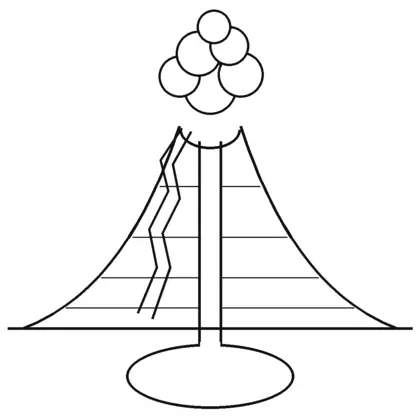
Years 3–4 · Volcanoes and earthquakesSheet 164
Inside a Volcano
Years 3–4 · Volcanoes and earthquakesSheet 165
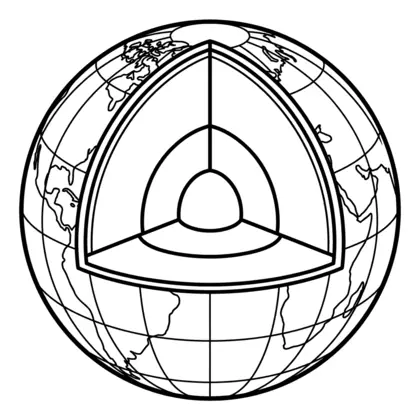
Layers of the Earth
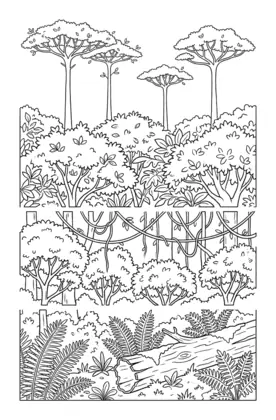
Years 3–4 · RainforestsSheet 163
Layers of the Rainforest
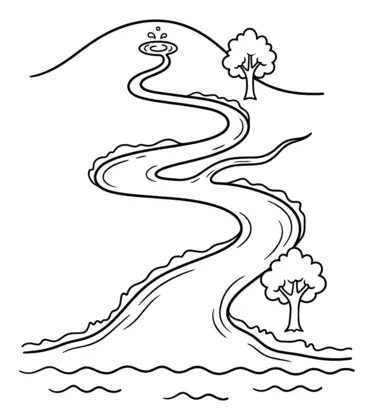
Years 3–4 · RiversSheet 125
Parts of a River
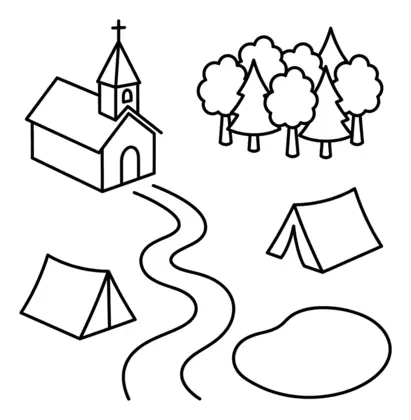
Years 4–5 · Map skillsSheet 162
Reading a Map: Symbols and a Key
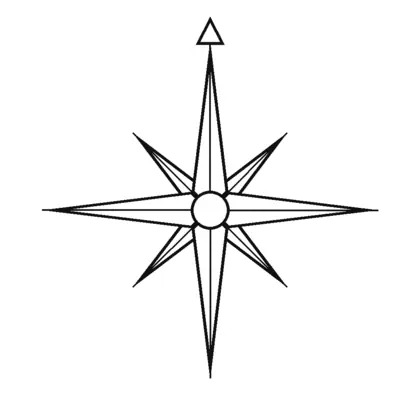
Years 3–4 · Map skillsSheet 124
The 8-Point Compass
Educational quiz app · Ages 5-10
More learning in the Owee app
Owee turns topics like this into quizzes for children aged 5 to 10, and a treehouse grows as they learn. No ads, no chat, no strangers.
- Family-friendly
- No ads
- Private
Educational quiz app · Ages 5-10
More learning in the Owee app
Owee turns topics like this into quizzes for children aged 5 to 10, and a treehouse grows as they learn. No ads, no chat, no strangers.
Scan with your phone camera
- Family-friendly
- No ads
- Private