Educational quiz app · Ages 5-10
This is what learning looks like


Educational quiz app · Ages 5-10
This is what learning looks like
No nagging required. Keep the learning going after the worksheet, with every question read aloud and Owee guiding each step.
Scan with your phone camera
- Family-friendly
- No ads
- Private
History · Colouring and short-answer worksheet
Egyptian Mummies and Canopic Jars: Free KS2 History Worksheet
The Ancient Egyptians believed that life continued after death, and that the body needed to be carefully preserved so its owner could use it in the next world. This free printable worksheet introduces children in Key Stage 2 to mummification and the four canopic jars used to protect a person's organs, as part of a depth study of Ancient Egypt.
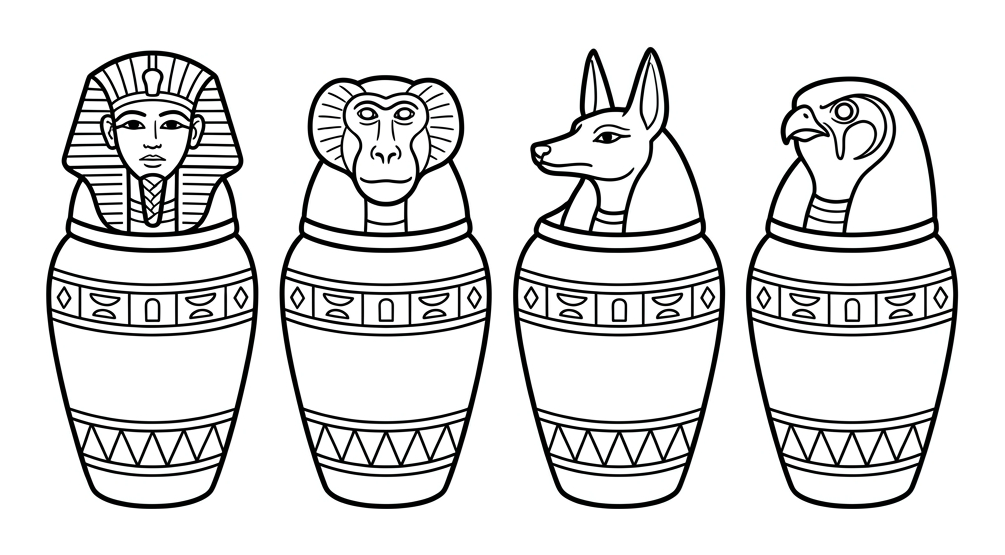
Children colour the four jars, each with a different head on its lid, and answer five short questions about mummification and why the Egyptians took such care over burial. It prints on a single A4 page and needs only colouring pencils and a pencil, so it works as a lesson starter, a homework task or a quiet activity at home.
What your child is learning
‘the achievements of the earliest civilizations – an overview of where and when the first civilizations appeared and a depth study of one of the following: Ancient Sumer, The Indus Valley, Ancient Egypt, The Shang Dynasty of Ancient China’
Key stage 2 History: Earliest civilizations (Ancient Egypt depth study), National Curriculum in England. Source and licence
Egyptian Mummies and Canopic Jars
Free History worksheet · Ages 8 to 10
Activity 1
Colour the four canopic jars. Give each lid its own colours. Egyptian painters liked gold, deep blue and red-brown.
Activity 2
Answer the questions. Use the word bank to help you.
What do we call drying and wrapping a body so that it does not rot?
What salt did the embalmers use to dry out the body?
What were the four jars that held the organs called?
Which organ was usually left inside the body?
Why did the Egyptians want to keep the body safe after death?
 Egyptian Mummies and Canopic JarsSheet 127
Answers: Egyptian Mummies and Canopic Jars
Sheet 127
- What do we call drying and wrapping a body so that it does not rot? — Mummification
- What salt did the embalmers use to dry out the body? — Natron
- What were the four jars that held the organs called? — Canopic jars
- Which organ was usually left inside the body? — The heart
- Why did the Egyptians want to keep the body safe after death? — They believed the person's spirit needed its body in the afterlife.
For grown-ups. Free worksheets and the Owee quiz app at owee.world
Answer key
- What do we call drying and wrapping a body so that it does not rot? — Mummification
- What salt did the embalmers use to dry out the body? — Natron
- What were the four jars that held the organs called? — Canopic jars
- Which organ was usually left inside the body? — The heart
- Why did the Egyptians want to keep the body safe after death? — They believed the person's spirit needed its body in the afterlife.
Why did the Ancient Egyptians make mummies?
The Egyptians believed that a person was made up of more than just their body. They thought each person also had a spirit, and that the spirit needed to recognise and return to its body in the afterlife. If the body decayed, they feared the spirit would be lost forever. Mummification was therefore a religious act: by drying and preserving the body, embalmers hoped to keep their loved one safe for eternity. The whole process took around seventy days. Embalmers removed the organs, dried the body with a natural salt called natron for about forty days, then wrapped it in many layers of linen. The brain was pulled out through the nose and thrown away, because the Egyptians did not think it mattered. Children usually find that detail memorable, and it helps them see that every step had a reason in Egyptian belief.
What were the four canopic jars for?
During mummification, embalmers removed the organs that would otherwise rot first. The lungs, stomach, intestines and liver were each dried and placed in one of four special containers called canopic jars. The heart was usually left inside the body, because the Egyptians believed it was the centre of thought and feeling and would be needed in the afterlife. A common mix-up is to think the heart went into a jar too. Each jar was protected by one of the four sons of the god Horus, and the lids showed their heads: Imsety with a human head guarded the liver, Hapy with a baboon head guarded the lungs, Duamutef with a jackal head guarded the stomach, and Qebehsenuef with a falcon head guarded the intestines. On the sheet the jars appear in that order, from left to right. Older jars often had four human-headed lids; the animal heads became common later.
The painted coffin and the journey to the afterlife
Once wrapped, a mummy was placed inside a decorated coffin, sometimes within several nested coffins. These coffins were brightly painted with protective symbols, spells and images of gods such as Osiris, ruler of the underworld, and Anubis, the jackal-headed god of embalming. The Egyptians believed the dead person faced a journey through the underworld, ending with the 'weighing of the heart' ceremony, where the heart was balanced against a feather representing truth and justice. The paintings, jewellery and goods buried alongside the body were all meant to help and protect the dead person on this journey. Talking about the coffin alongside the canopic jars gives children a fuller picture of Egyptian burial beliefs.
How to use this worksheet at home or in class
Before your child starts, look together at photographs of real canopic jars; the British Museum's online collection has several sets. While they colour, ask them to name the animal on each lid and say which organ it guarded, using the list above. The written questions check the key words: mummification, natron, canopic jars, the heart and the afterlife. The last question asks why the Egyptians preserved bodies, so listen for an answer that mentions the spirit needing its body. Another common mix-up is that every mummy went into a pyramid: pyramids were built for early kings, and most Egyptians were buried in much simpler tombs. For an extension, your child could find out about the weighing of the heart or design a pattern for a coffin.
Frequently asked questions
What were canopic jars used for?
Canopic jars were containers used during mummification to store and protect a person's preserved organs: the lungs, stomach, intestines and liver. The Egyptians believed these organs might be needed in the afterlife, so each jar was guarded by one of the four sons of the god Horus.
What were the four canopic jars and which organs did they hold?
The four jars were guarded by the sons of Horus. Imsety (human head) held the liver, Hapy (baboon head) held the lungs, Duamutef (jackal head) held the stomach, and Qebehsenuef (falcon head) held the intestines. The heart was usually left inside the body.
Why did the Ancient Egyptians make mummies?
The Egyptians believed in life after death and thought a person's spirit needed to recognise and return to its body. By preserving the body through mummification, they hoped to keep their loved one safe for eternity in the afterlife.
Is this canopic jars worksheet suitable for KS2?
Yes. It is written for Key Stage 2, especially Years 3 and 4, when many schools study Ancient Egypt. It supports the National Curriculum depth study of an early civilisation, covering beliefs and burial practices in age-appropriate language.
Is the worksheet free to print?
Yes. The worksheet is free to download and print. It fits on a single A4 page, with a line-art picture of the four jars to colour and five short questions to answer, ready for home or classroom use.
Curriculum links
- Key stage 2 History: Earliest civilizations (Ancient Egypt depth study) (statutory): 'the achievements of the earliest civilizations – an overview of where and when the first civilizations appeared and a depth study of one of the following: Ancient Sumer, The Indus Valley, Ancient Egypt, The Shang Dynasty of Ancient China'
Quoted word for word from Department for Education documents: the National Curriculum in England, the EYFS framework or the RSHE guidance. Contains public sector information licensed under the Open Government Licence v3.0.
Made by The Owee education team. Updated 13/10/2026. Free to print and share.
More history worksheets
All Year 3 worksheets →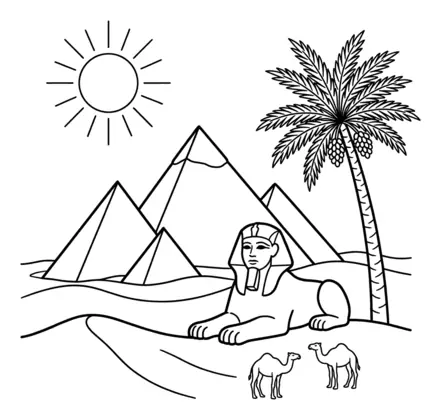
Years 3–4 · Ancient EgyptSheet 128
The Egyptian Pyramids
Years 3–4 · RomansSheet 167
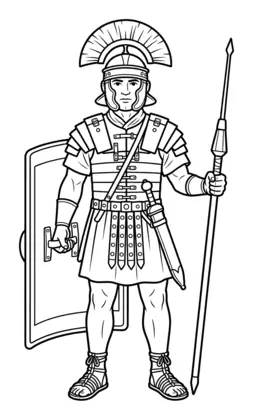
Label a Roman Soldier
Years 3–4 · Stone Age to Iron AgeSheet 129
Stone Age to Iron Age Timeline
Years 1–2 · CastlesSheet 47
Parts of a Castle
Years 1–2 · Famous peopleSheet 94
The First Moon Landing
Years 1–2 · Great Fire of LondonSheet 95
The Great Fire of London
Educational quiz app · Ages 5-10
More learning in the Owee app
Owee turns topics like this into quizzes for children aged 5 to 10, and a treehouse grows as they learn. No ads, no chat, no strangers.
- Family-friendly
- No ads
- Private
Educational quiz app · Ages 5-10
More learning in the Owee app
Owee turns topics like this into quizzes for children aged 5 to 10, and a treehouse grows as they learn. No ads, no chat, no strangers.
Scan with your phone camera
- Family-friendly
- No ads
- Private