Educational quiz app · Ages 5-10
This is what learning looks like


Educational quiz app · Ages 5-10
This is what learning looks like
No nagging required. Keep the learning going after the worksheet, with every question read aloud and Owee guiding each step.
Scan with your phone camera
- Family-friendly
- No ads
- Private
Science · Sorting and colouring worksheet
The Eatwell Guide Food Groups: Free KS2 Science Worksheet
The Eatwell Guide is the UK government's model of a healthy, balanced diet, and it is one of the clearest ways to introduce Year 3 children to the idea that our bodies need different kinds of food in different amounts. This free printable worksheet asks children to sort familiar foods into the main food groups and to colour a basket of shopping, linking healthy eating to the Year 3 Science topic Animals, including humans.
Designed to print neatly onto a single sheet of A4, it works well as a starter, a homework task or a quick assessment of what children already understand about nutrition. The word bank means children can succeed independently while still thinking carefully about where each food belongs.
What your child is learning
‘identify that animals, including humans, need the right types and amount of nutrition, and that they cannot make their own food; they get nutrition from what they eat’
Year 3 Science: Animals, including humans, National Curriculum in England. Source and licence
The Eatwell Guide Food Groups
Free Science worksheet · Ages 7 to 9
Sort the foods into their groups
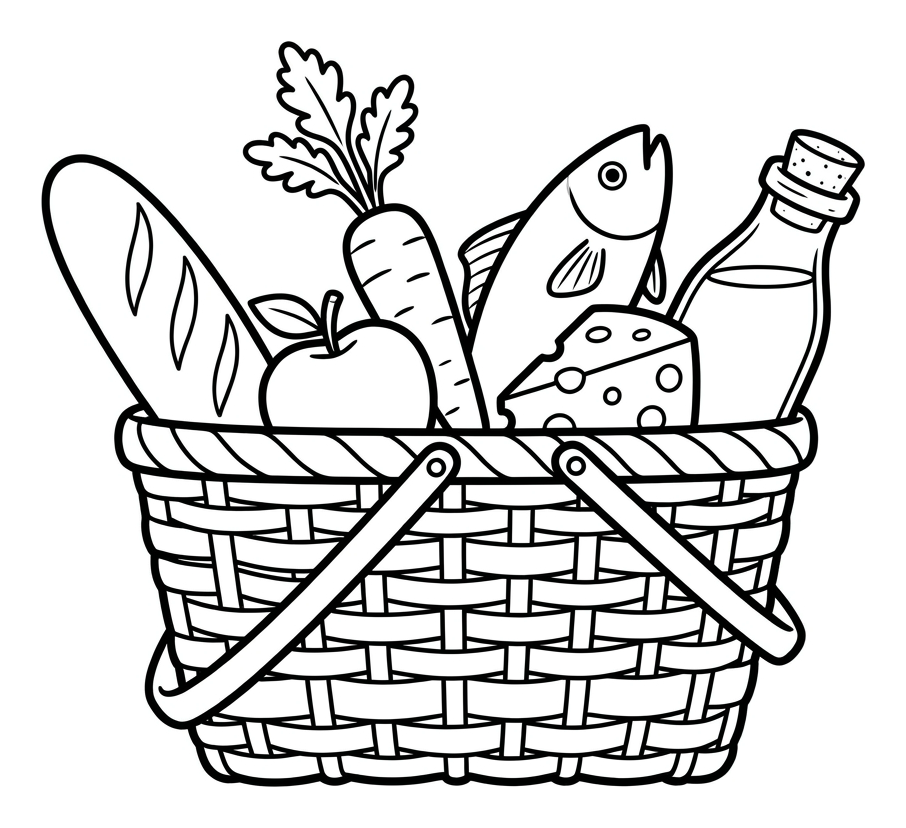
Look at the foods in the basket. The bottle holds milk. Write each food from the word bank on the line under its food group.
Fruit and vegetables (write two foods)
Starchy carbohydrates (write one food)
Protein foods (write one food)
Dairy and alternatives (write two foods)
Colour the healthy basket
Colour the basket of foods using real-life colours.
- Colour the apple red and the carrot orange.
- Colour the cheese yellow. Leave the milk white and colour the cork brown.
- Colour the bread brown and the fish grey or silver.
 The Eatwell Guide Food GroupsSheet 113
Answers: The Eatwell Guide Food Groups
Sheet 113
- Fruit and vegetables (write two foods) — apple, carrot
- Starchy carbohydrates (write one food) — bread
- Protein foods (write one food) — fish
- Dairy and alternatives (write two foods) — cheese, milk
For grown-ups. Free worksheets and the Owee quiz app at owee.world
Answer key
- Fruit and vegetables (write two foods) — apple, carrot
- Starchy carbohydrates (write one food) — bread
- Protein foods (write one food) — fish
- Dairy and alternatives (write two foods) — cheese, milk
What the Eatwell Guide teaches children
The Eatwell Guide divides the foods we eat into five main groups: fruit and vegetables; potatoes, bread, rice, pasta and other starchy carbohydrates; beans, pulses, fish, eggs, meat and other proteins; dairy and alternatives; and a very small portion of oils and spreads. Foods high in fat, salt and sugar, such as cake and crisps, sit outside the plate because they are not needed and should be eaten less often and in small amounts. It is shown as a plate so that the size of each section reflects roughly how much of that group we should eat. For children aged 7 to 9, the key message is not to count or measure but to grasp that a balanced diet contains a variety of foods, with plenty of fruit, vegetables and starchy carbohydrates and only small amounts of foods high in fat, salt and sugar.
Why nutrition matters in Year 3 Science
In Year 3 the National Curriculum asks pupils to learn that animals, including humans, need the right types and amount of nutrition, and that they cannot make their own food in the way that plants do. This is an important distinction: plants produce their own food through photosynthesis, whereas humans and other animals must obtain nutrients by eating. Sorting real foods into groups helps children see that 'healthy eating' is really about getting a balance of nutrients, and prepares them for later work on the human digestive system and the food chains studied in Year 4.
How to use this worksheet at home or in class
Begin by talking through the picture of the shopping basket and naming each food together. Point out that the bottle in the basket holds milk. Encourage children to read every word in the word bank before they start sorting, and to explain their reasoning aloud, for example that bread is a starchy carbohydrate because it gives us energy. The colouring task is more than decoration: discussing the colours of real fruit and vegetables reinforces the idea of eating a 'rainbow' of plant foods. For an extension, ask children to add one more food to each group from their own kitchen, or to plan a balanced lunch using at least three different groups.
Common misconceptions to watch for
Children often assume that all 'nice' foods such as cake and crisps are unhealthy and all 'plain' foods are healthy, when in fact the Eatwell Guide is about balance rather than banning foods. Another frequent muddle is grouping cheese and milk with protein rather than recognising dairy as its own group, or placing potatoes with vegetables instead of with starchy carbohydrates. Gentle questioning helps here: ask what job each food does for the body. The aim is for children to leave the activity understanding that no single food is 'perfect' and that variety across the groups is what keeps us healthy.
Frequently asked questions
What are the five food groups in the Eatwell Guide?
The Eatwell Guide shows five main groups: fruit and vegetables; potatoes, bread, rice, pasta and other starchy carbohydrates; beans, pulses, fish, eggs, meat and other proteins; dairy and alternatives; and a small amount of oils and spreads. The size of each section on the plate shows roughly how much of that group we should eat.
Is this worksheet suitable for Year 3 Science?
Yes. It is written for the Year 3 'Animals, including humans' unit, which asks pupils to learn that humans need the right types and amount of nutrition and cannot make their own food. It also suits mixed Year 3 and 4 classes and can be used for PSHE healthy-eating lessons.
Is the worksheet free to download and print?
Yes, it is completely free. The page is designed to print onto a single sheet of A4 with no login or payment required, so you can use it at home or photocopy it for a class.
Which food group do milk and cheese belong to?
Milk and cheese belong to the dairy group, not the protein group, even though they do contain protein. The Eatwell Guide keeps dairy and alternatives as their own group because of the calcium they provide for healthy bones and teeth.
How can I extend the activity for more able children?
Ask children to add an extra food to each group from their own kitchen, to plan a balanced packed lunch using at least three groups, or to explain why plants do not need to eat food in the way humans do. These links reinforce both the nutrition objective and later food-chain work.
Curriculum links
- Year 3 Science: Animals, including humans (statutory): 'identify that animals, including humans, need the right types and amount of nutrition, and that they cannot make their own food; they get nutrition from what they eat'
Quoted word for word from Department for Education documents: the National Curriculum in England, the EYFS framework or the RSHE guidance. Contains public sector information licensed under the Open Government Licence v3.0.
Made by The Owee education team. Updated 13/10/2026. Free to print and share.
More science worksheets
All Year 3 Science worksheets →
Years 1–2 · Healthy livingSheet 80
Keeping Clean: Wash Your Hands
Years 1–2 · Healthy livingSheet 81
My Healthy Plate
Years 3–4 · Teeth and digestionSheet 157
Animal Teeth and What They Eat
Years 3–4 · Food chainsSheet 152
Build a Food Chain: Label and Colour
Years 3–4 · Food chainsSheet 153
Build a Food Chain: Label and True or False
Years 3–5 · Forces and magnetsSheet 175
Forces and Friction
Educational quiz app · Ages 5-10
More learning in the Owee app
Owee turns topics like this into quizzes for children aged 5 to 10, and a treehouse grows as they learn. No ads, no chat, no strangers.
- Family-friendly
- No ads
- Private
Educational quiz app · Ages 5-10
More learning in the Owee app
Owee turns topics like this into quizzes for children aged 5 to 10, and a treehouse grows as they learn. No ads, no chat, no strangers.
Scan with your phone camera
- Family-friendly
- No ads
- Private