Educational quiz app · Ages 5-10
This is what learning looks like


Educational quiz app · Ages 5-10
This is what learning looks like
No nagging required. Keep the learning going after the worksheet, with every question read aloud and Owee guiding each step.
Scan with your phone camera
- Family-friendly
- No ads
- Private
Maths · Counting and writing worksheet
Counting in 2s Worksheet: Free Printable Pairs of Wellies (KS1)
Counting in twos is one of the first steps towards understanding multiplication, and it is far easier to grasp when children can see why things come in pairs. This free printable uses six pairs of wellington boots — because boots, like shoes, socks and gloves, come in twos — to make the pattern feel natural and obvious.
Designed for Year 1 and Year 2 children (ages 5 to 7), the sheet asks children to count the pairs, count the boots in twos up to 12, and fill in missing numbers on three number tracks, one of them counting backwards. It prints cleanly to a single A4 page and doubles as a colouring activity, so it works equally well in the classroom, at a maths intervention table, or at the kitchen table on a rainy afternoon.
What your child is learning
‘count, read and write numbers to 100 in numerals; count in multiples of 2s, 5s and 10s’
Year 1 Maths: Number – number and place value, National Curriculum in England. Source and licence
Count in 2s: Pairs of Wellies
Free Maths worksheet · Ages 5 to 7
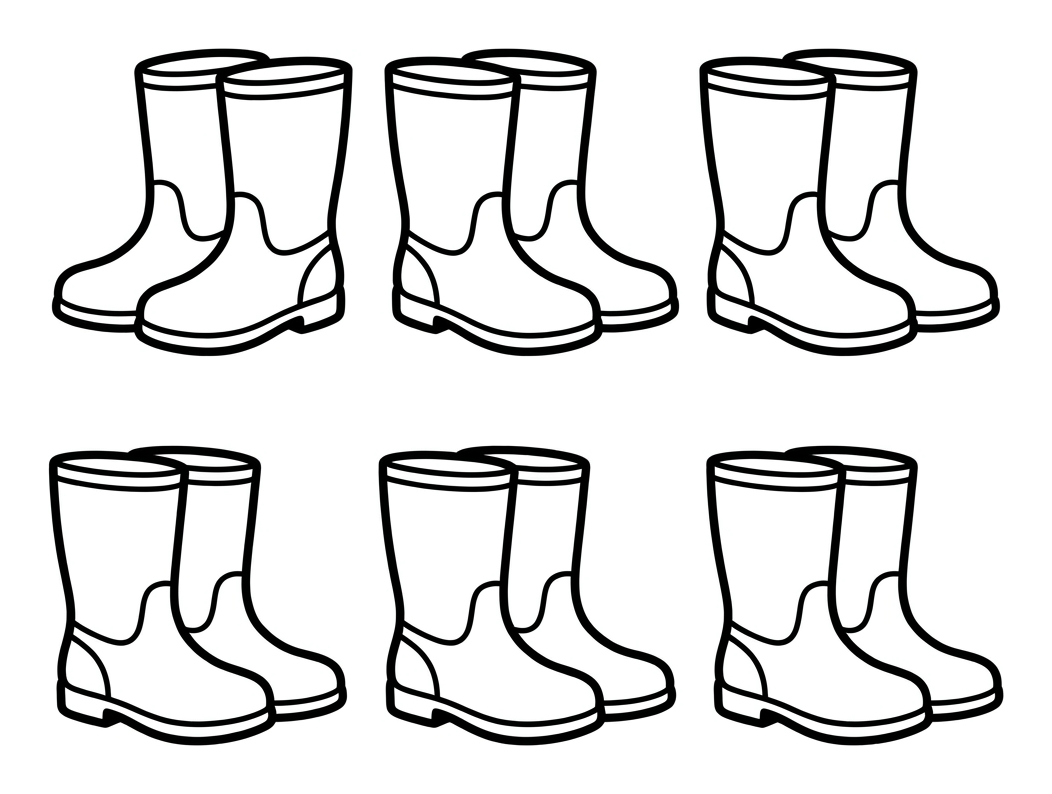
Count the wellies
Point to each pair and count in twos: two, four, six… Write the number in the box.
- How many pairs of wellies are there?
- Count the boots in twos. How many boots are there altogether?
- Count the boots in the top row in twos. How many boots is that?
Fill in the missing numbers
Count in twos to fill each box. The last row counts back. Then colour each pair of wellies a different colour.
- 24610
- 4812
- 121062
 Count in 2s: Pairs of WelliesSheet 14
Answers: Count in 2s: Pairs of Wellies
Sheet 14
- How many pairs of wellies are there? — 6
- Count the boots in twos. How many boots are there altogether? — 12
- Count the boots in the top row in twos. How many boots is that? — 6
- Row 1: 8, 12
- Row 2: 2, 6, 10
- Row 3: 8, 4
For grown-ups. Free worksheets and the Owee quiz app at owee.world
Answer key
- How many pairs of wellies are there? — 6
- Count the boots in twos. How many boots are there altogether? — 12
- Count the boots in the top row in twos. How many boots is that? — 6
- Row 1: 8, 12
- Row 2: 2, 6, 10
- Row 3: 8, 4
Why counting in twos matters in KS1
Counting in twos is one of the earliest multiplication patterns children meet, and it appears explicitly in the National Curriculum from Year 1. Before children can confidently recall the two times table in Year 2, they need a secure feel for the rhythm of even numbers: 2, 4, 6, 8, 10. Counting real-life pairs — boots, socks, gloves, eyes, ears — gives that rhythm a concrete anchor. It also lays the groundwork for skip counting in fives and tens, for understanding odd and even numbers, and for the idea that multiplication is repeated, equal-sized groups.
How to use this worksheet
Start by asking the child what they notice about the boots in the picture — the answer you are hoping for is that they come in pairs. Encourage them to point to each pair and count it as "two", then count the boots in twos out loud while touching each pair: "two, four, six, eight, ten, twelve". This physical pointing matters; it links the spoken number sequence to the objects and stops children losing their place. Once they are confident, they can write the totals in the boxes and fill in the number tracks. The last track counts back from 12, which many children find harder than counting forwards, so it is worth saying it aloud together first. The colouring element is not just decoration — colouring each pair the same colour reinforces the idea of equal groups.
Making it harder or easier
To simplify the activity for a child who is still finding it tricky, cover all but the first two or three pairs and build up slowly, or count along together before they write anything. To stretch a more confident child, ask them to carry on the pattern past the boots ("if there were one more pair, what would come next?"), to count backwards in twos from the final total, or to spot that every answer is an even number. You can also connect it to the two times table by asking, "how many pairs make eight boots?" — turning the count into early division thinking. A common slip is saying a number for every single boot instead of every pair, which gives 24; pointing to each pair once fixes it.
Linking it to everyday life
The most powerful maths practice happens away from the worksheet. Reinforce counting in twos during ordinary routines: pairing up socks from the washing, counting shoes by the front door, laying the table with two items per place, or counting steps two at a time. Repeated, low-pressure exposure across the week helps the sequence become automatic. When children can chant 2, 4, 6, 8, 10 as easily as they count in ones, they are well prepared for the formal two times table work that follows in Year 2.
Frequently asked questions
What age is counting in twos taught?
Counting in multiples of two is introduced in Year 1 (ages 5 to 6) in the English National Curriculum, alongside counting in fives and tens. It is consolidated in Year 2 (ages 6 to 7), where children also begin to recall the two times table. This worksheet suits children across that 5 to 7 age range.
How do I teach my child to count in 2s?
Begin with real pairs your child already understands, such as shoes, socks or gloves, and count them together by touching each pair and saying "two, four, six, eight". Pointing while counting keeps children from losing their place. Once the spoken pattern is familiar, move to written sequences and worksheets like this one, then practise during everyday routines to make it automatic.
Is this counting in 2s worksheet free to print?
Yes. This worksheet is completely free to download and print. It is designed to fit on a single A4 page and works in both colour and black-and-white, so you can use it at home or photocopy it for a whole class.
What comes after counting in twos?
Once children are secure counting in twos, the natural next steps are counting in fives and tens, recognising odd and even numbers, and counting backwards in twos. By Year 2 this feeds directly into recalling the two times table and understanding multiplication as equal groups.
Why use wellington boots to teach counting in 2s?
Boots, like shoes and socks, naturally come in pairs, so they make the idea of grouping in twos obvious and concrete for young children. Counting familiar everyday objects rather than abstract numbers helps children see why the sequence jumps 2, 4, 6, 8 rather than simply memorising it.
Curriculum links
- Year 1 Maths: Number – number and place value (statutory): 'count, read and write numbers to 100 in numerals; count in multiples of 2s, 5s and 10s'
- Year 2 Number and place value: 'count in steps of 2, 3, and 5 from 0, and in tens from any number, forward and backward'
- Year 2 Multiplication and division: 'recall and use multiplication and division facts for the 2, 5 and 10 multiplication tables'
Quoted word for word from Department for Education documents: the National Curriculum in England, the EYFS framework or the RSHE guidance. Contains public sector information licensed under the Open Government Licence v3.0.
Made by The Owee education team. Updated 13/10/2026. Free to print and share.
More maths worksheets
All Year 1 Maths worksheets →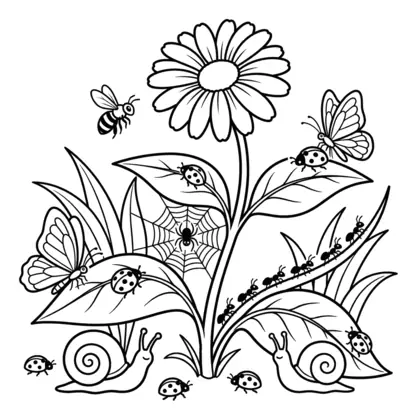
Reception–Year 1 · CountingSheet 1
Count the Minibeasts
Reception–Year 1 · CountingSheet 15
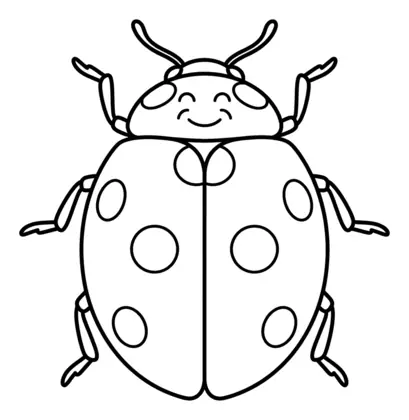
Count to 20: Ladybird Spots
Years 2–3 · CountingSheet 59
Counting in 3s
Year 3 · CountingSheet 98
Counting in 4s, 8s, 50s and 100s
Years 1–2 · CountingSheet 16
Counting in 5s and 10s
Reception–Year 1 · CountingSheet 2
Under the Sea: Count the Ocean Animals
Educational quiz app · Ages 5-10
More learning in the Owee app
Owee turns topics like this into quizzes for children aged 5 to 10, and a treehouse grows as they learn. No ads, no chat, no strangers.
- Family-friendly
- No ads
- Private
Educational quiz app · Ages 5-10
More learning in the Owee app
Owee turns topics like this into quizzes for children aged 5 to 10, and a treehouse grows as they learn. No ads, no chat, no strangers.
Scan with your phone camera
- Family-friendly
- No ads
- Private