Educational quiz app · Ages 5-10
This is what learning looks like


Educational quiz app · Ages 5-10
This is what learning looks like
No nagging required. Keep the learning going after the worksheet, with every question read aloud and Owee guiding each step.
Scan with your phone camera
- Family-friendly
- No ads
- Private
Art · Colouring and labelling worksheet
Colour Wheel Worksheet: Free Primary and Secondary Colours Printable (KS1)
A colour wheel is one of the simplest and most rewarding ways to introduce young children to how colours relate to one another. This free, printable worksheet gives children a clean six-segment wheel to colour, helping them learn the three primary colours — red, yellow and blue — and discover how mixing pairs of them creates the secondary colours: orange, green and purple.
Designed for children aged 5 to 7, it prints neatly onto a single A4 page. Children colour the three primaries first, leaving a gap between each one, then fill each gap with the colour those two neighbours make. Short questions then ask them to name and spell the colours and say which two make orange, green and purple. It works in a Year 1 or Year 2 classroom, in an after-school art club or at the kitchen table.
What your child is learning
‘to develop a wide range of art and design techniques in using colour, pattern, texture, line, shape, form and space’
Key stage 1 Art and design, National Curriculum in England. Source and licence
Colour Wheel: Primary & Secondary Colours
Free Art worksheet · Ages 5 to 7
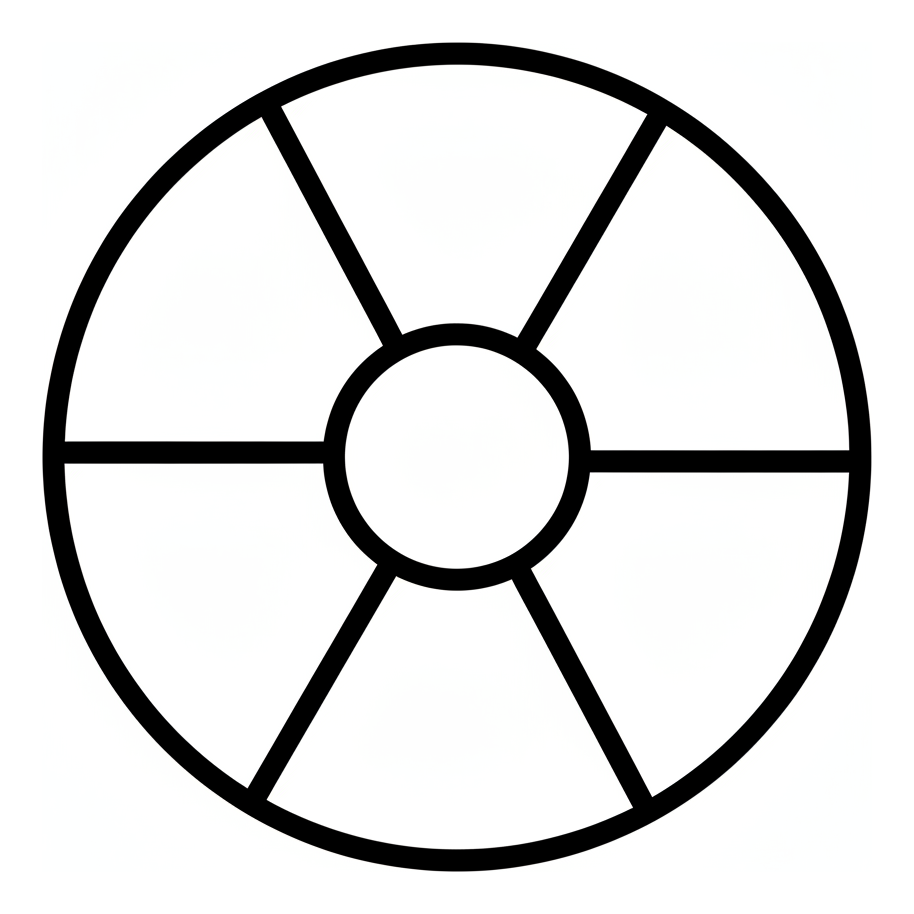
Colour the colour wheel
Make your own colour wheel. Colour the primary colours first, then fill the gaps.
- Colour one segment red. Skip one, colour yellow. Skip one, colour blue.
- Between red and yellow, colour the segment orange.
- Between yellow and blue, colour the segment green.
- Between blue and red, colour the segment purple.
Name the colours
Answer each question. Use the word bank to help you spell.
Write the three primary colours.
Write the three secondary colours.
Which two colours mix to make orange?
Which two colours mix to make green?
Which two colours mix to make purple?
 Colour Wheel: Primary & Secondary ColoursSheet 50
Answers: Colour Wheel: Primary & Secondary Colours
Sheet 50
- Write the three primary colours. — red, yellow, blue
- Write the three secondary colours. — orange, green, purple
- Which two colours mix to make orange? — red and yellow
- Which two colours mix to make green? — yellow and blue
- Which two colours mix to make purple? — blue and red
For grown-ups. Free worksheets and the Owee quiz app at owee.world
Answer key
- Write the three primary colours. — red, yellow, blue
- Write the three secondary colours. — orange, green, purple
- Which two colours mix to make orange? — red and yellow
- Which two colours mix to make green? — yellow and blue
- Which two colours mix to make purple? — blue and red
What are primary and secondary colours?
The three primary colours are red, yellow and blue. In painting they are called primary because you cannot mix them from other paints, and together they make most of the colours children will need. When you mix two primary colours you make a secondary colour: red and yellow make orange, yellow and blue make green, and blue and red make purple (sometimes called violet). A colour wheel arranges these six colours in a circle so that each secondary colour sits between the two primaries that make it. If an older child has heard that the primaries are red, green and blue, explain that this is true for light on screens, not for paint.
How to use this colour wheel worksheet
Give your child pencils, crayons or felt tips in red, yellow, blue, orange, green and purple. Colour one segment red, skip one, colour the next yellow, skip one and colour the next blue. Before filling each gap, ask which two neighbours mix to make it, then colour it in. If you have paints, mix the secondary colours on a plate and compare them with the wheel. A common surprise: red and blue paint often make a dull brownish purple, because many reds contain a little yellow. A pinkish red such as crimson gives a brighter purple. Finish with the questions. Staying inside the lines matters far less than knowing why each colour sits where it does.
Why the colour wheel matters in KS1 art
Once children understand primary and secondary colours, they can make deliberate choices in their own work: mixing the green they need for grass instead of hoping for it, and noticing colour in the world around them. The National Curriculum for Key Stage 1 asks pupils to develop a wide range of techniques in using colour, and making a colour wheel by hand is a clear, practical way to start. Many schools build on it in Key Stage 2 with tints, shades and complementary colours (the pairs that sit opposite each other, such as red and green).
Extending the activity
Once the wheel is complete, there are simple ways to extend the learning. Go on a colour hunt around the room or garden and sort objects into primary and secondary colours. Try mixing paints in small amounts to see the secondary colours appear, or experiment with how adding white makes a colour lighter (a tint) and adding a little black makes it darker (a shade). You might also ask the child which colours they think look warm (reds, oranges, yellows) and which look cool (blues, greens, purples) — an early, playful introduction to colour temperature.
Frequently asked questions
What are the three primary colours?
The three primary colours are red, yellow and blue. They are called primary because you cannot mix them from other paints, and mixing them makes most of the other colours children use.
What are the secondary colours?
The secondary colours are orange, green and purple. Each one is made by mixing two primary colours: red and yellow make orange, yellow and blue make green, and blue and red make purple.
What age is this colour wheel worksheet for?
It is designed for children aged 5 to 7, which covers Years 1 and 2 in Key Stage 1. Younger children may simply colour the wheel, while older children can also write the colour names and explain how the secondary colours are mixed.
Is the colour wheel worksheet free to print?
Yes. The worksheet is completely free to download and print, and it fits onto a single A4 page so it is easy to use at home or in the classroom.
How do you arrange colours on a colour wheel?
The three primary colours (red, yellow and blue) are spaced evenly around the wheel, and each secondary colour is placed between the two primaries that make it. So orange sits between red and yellow, green between yellow and blue, and purple between blue and red.
Curriculum links
- Key stage 1 Art and design (statutory): 'to develop a wide range of art and design techniques in using colour, pattern, texture, line, shape, form and space'
- Art and design (KS1): 'to use a range of materials creatively to design and make products'
- Art and design (KS1): 'to use drawing, painting and sculpture to develop and share their ideas, experiences and imagination'
- Art and design (KS1): 'about the work of a range of artists, craft makers and designers, describing the differences and similarities between different practices and disciplines'
Quoted word for word from Department for Education documents: the National Curriculum in England, the EYFS framework or the RSHE guidance. Contains public sector information licensed under the Open Government Licence v3.0.
Made by The Owee education team. Updated 13/10/2026. Free to print and share.
Educational quiz app · Ages 5-10
More learning in the Owee app
Owee turns topics like this into quizzes for children aged 5 to 10, and a treehouse grows as they learn. No ads, no chat, no strangers.
- Family-friendly
- No ads
- Private
Educational quiz app · Ages 5-10
More learning in the Owee app
Owee turns topics like this into quizzes for children aged 5 to 10, and a treehouse grows as they learn. No ads, no chat, no strangers.
Scan with your phone camera
- Family-friendly
- No ads
- Private