Educational quiz app · Ages 5-10
This is what learning looks like


Educational quiz app · Ages 5-10
This is what learning looks like
No nagging required. Keep the learning going after the worksheet, with every question read aloud and Owee guiding each step.
Scan with your phone camera
- Family-friendly
- No ads
- Private
English · Punctuation and grammar worksheet
Capital Letters and Full Stops Worksheet (Free KS1 Punctuation)
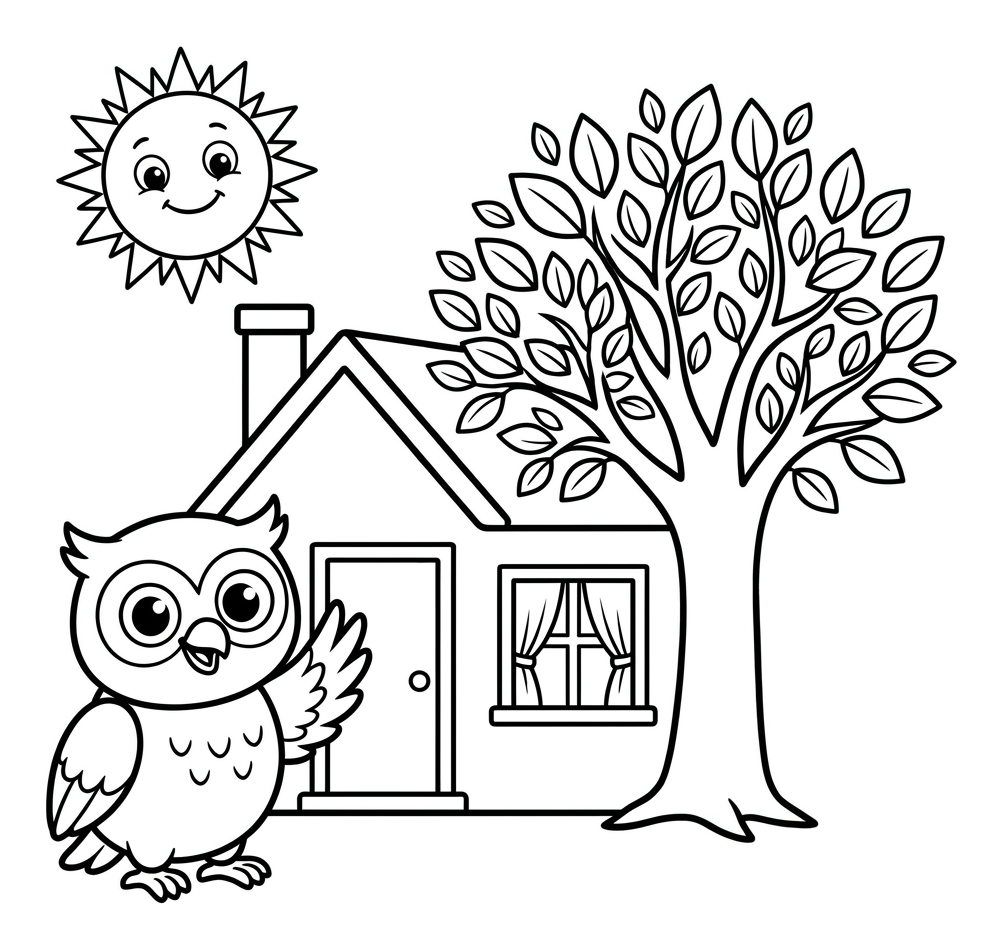
This free printable worksheet gives children in Year 1 and early Year 2 a gentle, focused introduction to the two punctuation marks that hold a sentence together: the capital letter at the start and the full stop at the end. The simple puppy-and-house scene can be coloured in first to settle little hands before the writing tasks begin.
Designed to print neatly onto a single A4 page, the sheet pairs a short "add the missing punctuation" task with a "tick the correct sentences" task, so children both produce and recognise properly demarcated sentences. It works well for a quick morning starter, homework, or one-to-one support.
What your child is learning
‘beginning to punctuate sentences using a capital letter and a full stop, question mark or exclamation mark’
Year 1 English: Writing – vocabulary, grammar and punctuation, National Curriculum in England. Source and licence

Capital Letters and Full Stops
Free English worksheet · Ages 5 to 7
Add the missing capital letter and full stop
Read each sentence aloud. Rewrite it on the line, starting with a capital letter and ending with a full stop.
the dog waved at me
we have a little house
the sun is very hot
the tree has lots of leaves
Tick the correct sentences
Tick each sentence that has a capital letter at the start and a full stop at the end.
- The tree is green.
- my house is small.
- The dog can run
- The sun is shining.
- i can see the dog.
- We like the little house.
 Capital Letters and Full StopsSheet 24
Answers: Capital Letters and Full Stops
Sheet 24
- the dog waved at me — The dog waved at me.
- we have a little house — We have a little house.
- the sun is very hot — The sun is very hot.
- the tree has lots of leaves — The tree has lots of leaves.
- The tree is green. — tick
- my house is small. — no tick: needs a capital M
- The dog can run — no tick: needs a full stop
- The sun is shining. — tick
- i can see the dog. — no tick: I is always a capital letter
- We like the little house. — tick
For grown-ups. Free worksheets and the Owee quiz app at owee.world
Answer key
- the dog waved at me — The dog waved at me.
- we have a little house — We have a little house.
- the sun is very hot — The sun is very hot.
- the tree has lots of leaves — The tree has lots of leaves.
- The tree is green. — tick
- my house is small. — no tick: needs a capital M
- The dog can run — no tick: needs a full stop
- The sun is shining. — tick
- i can see the dog. — no tick: I is always a capital letter
- We like the little house. — tick
What this worksheet teaches
By the end of Year 1, children are expected to begin punctuating sentences using a capital letter and a full stop. This worksheet isolates that single skill so it does not get lost among other demands. In the first task, children copy or rewrite short, familiar sentences, supplying the capital letter the sentence is missing at the start and the full stop it is missing at the end. In the second task, they check six sentences and tick only the ones that are correct. Some are missing a capital letter, some a full stop, and one tests the capital letter for I, so children have to check both ends of every sentence. Reading the sentence aloud and pausing where the full stop belongs is the most reliable strategy at this age, because punctuation is closely tied to the natural rhythm of speech.
How to use it at home or in class
Begin with the colouring picture: it lowers the stakes and gives reluctant writers a calm start. Then read each sentence in the first task aloud together, asking the child to point to the very first letter and the very last word before they make a mark. Encourage them to say "big letter to start, full stop to finish" as a memorable rule of thumb. For the ticking task, ask the child to explain what is wrong with each sentence they leave blank, as putting the reasoning into words deepens the learning far more than the tick itself. Keep sessions short and praise effort; this skill is built through frequent, low-pressure repetition rather than long bursts.
Common difficulties and how to support them
Two errors are very common at this stage. The first is the missing or mid-sentence capital letter, often because children are still learning which letters look different in their capital form (such as a, e and r). Practising forming capitals separately, away from the punctuation task, can help. The second is the omitted full stop, especially when a child runs several ideas together. Pausing for breath while reading aloud highlights where each sentence should end. Some children also add capitals in the middle of words, mixing upper and lower case. Writing a sentence with your child and saying ‘only one capital, right at the start’ helps, unless the sentence contains a name or the word I.
What comes next
Alongside full stops, Year 1 children learn to use a capital letter for the word 'I' and for names of people, places and the days of the week, and they meet the question mark and exclamation mark. In Year 2, they use all of these more consistently and add commas in lists. Keeping early sentence demarcation secure makes all of this later punctuation work far smoother, so it is well worth returning to a sheet like this whenever a refresher is helpful.
Frequently asked questions
What age is this capital letters and full stops worksheet for?
It is designed for children aged 5 to 7, covering Year 1 and the start of Year 2 (Key Stage 1). The sentences are short and use everyday vocabulary so that young writers can focus purely on the punctuation.
Is the worksheet free to download and print?
Yes. The worksheet is completely free, prints onto a single A4 page, and uses plain black and white so it is easy on printer ink. You are welcome to use it at home or in the classroom.
What is the National Curriculum objective being practised?
It targets the Year 1 grammar and punctuation objective of beginning to punctuate sentences using a capital letter and a full stop, and supports the related skill of re-reading writing to check it makes sense.
How do I explain capital letters and full stops to a five year old?
Keep it simple: a sentence starts with a big (capital) letter and ends with a full stop, which is a tiny dot that tells the reader to stop. Reading sentences aloud and pausing at the dot helps children hear where each one ends.
What should children learn after capital letters and full stops?
In Year 1, children also learn to use a capital letter for the word 'I' and for names of people, places and days of the week, and they meet question marks and exclamation marks. In Year 2 these are used more consistently, alongside commas in lists.
Curriculum links
- Year 1 English: Writing – vocabulary, grammar and punctuation (statutory): 'beginning to punctuate sentences using a capital letter and a full stop, question mark or exclamation mark'
- English, Year 1, Writing - composition: 're-reading what they have written to check that it makes sense'
- English, Year 1, Vocabulary, grammar and punctuation: 'using a capital letter for names of people, places, the days of the week, and the personal pronoun 'I''
Quoted word for word from Department for Education documents: the National Curriculum in England, the EYFS framework or the RSHE guidance. Contains public sector information licensed under the Open Government Licence v3.0.
Made by The Owee education team. Updated 13/10/2026. Free to print and share.
More english worksheets
All Year 1 English worksheets →
Years 3–4 · PunctuationSheet 149
Apostrophes for Possession
Years 3–4 · PunctuationSheet 150
Punctuating Speech: Inverted Commas

Reception–Year 1 · SpellingSheet 25
Common Exception (Tricky) Words: Trace and Write
Years 2–3 · GrammarSheet 70
Conjunctions: because, but and so
Reception–Year 1 · PhonicsSheet 4
CVC Words: Read, Trace and Colour
Years 1–2 · GrammarSheet 71
Describing Words (Adjectives)
Educational quiz app · Ages 5-10
More learning in the Owee app
Owee turns topics like this into quizzes for children aged 5 to 10, and a treehouse grows as they learn. No ads, no chat, no strangers.
- Family-friendly
- No ads
- Private
Educational quiz app · Ages 5-10
More learning in the Owee app
Owee turns topics like this into quizzes for children aged 5 to 10, and a treehouse grows as they learn. No ads, no chat, no strangers.
Scan with your phone camera
- Family-friendly
- No ads
- Private