Educational quiz app · Ages 5-10
This is what learning looks like


Educational quiz app · Ages 5-10
This is what learning looks like
No nagging required. Keep the learning going after the worksheet, with every question read aloud and Owee guiding each step.
Scan with your phone camera
- Family-friendly
- No ads
- Private
Science · Counting and ticking worksheet
Animal Survival Needs Worksheet (Free KS1 Science Printable)
This free printable worksheet introduces a core Year 2 science idea: that every animal, including humans, needs the same three basic things to stay alive. Children count the animals in the scene and tick which things living creatures truly need to survive, building both their early science vocabulary and their counting confidence on a single A4 page.
It is designed for use at home or in the classroom and prints cleanly in black and white, so children can colour the picture as they talk through what each animal needs. The page works equally well as a quick starter, a homework task, or a calm independent activity.
What your child is learning
‘find out about and describe the basic needs of animals, including humans, for survival (water, food and air)’
Year 2 Science: Animals, including humans, National Curriculum in England. Source and licence
Animals and Their Survival Needs
Free Science worksheet · Ages 5 to 7
Activity 1
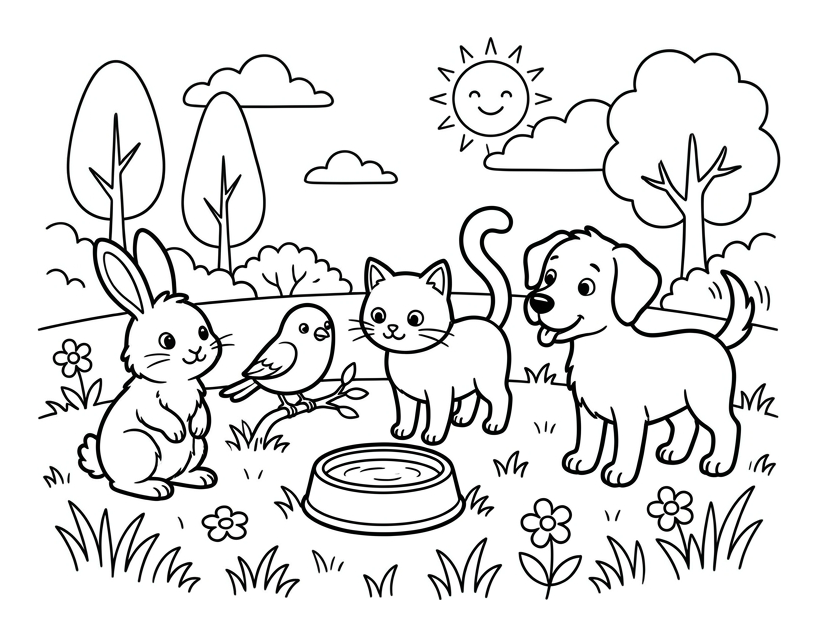
Look carefully at the picture. Count, then write each number in its box.
- How many animals are in the picture altogether?
- How many animals have fur?
- How many water bowls can you see?
Activity 2
What do animals need to stay alive? Tick each sentence that is true.
- Animals need food to stay alive.
- Animals need water to stay alive.
- Animals need air to stay alive.
- Animals need a television to stay alive.
- Animals need toys to stay alive.
 Animals and Their Survival NeedsSheet 79
Answers: Animals and Their Survival Needs
Sheet 79
- How many animals are in the picture altogether? — 4
- How many animals have fur? — 3 (the rabbit, the cat and the dog)
- How many water bowls can you see? — 1
- Animals need food to stay alive. — Tick
- Animals need water to stay alive. — Tick
- Animals need air to stay alive. — Tick
- Animals need a television to stay alive. — No tick
- Animals need toys to stay alive. — No tick
For grown-ups. Free worksheets and the Owee quiz app at owee.world
Answer key
- How many animals are in the picture altogether? — 4
- How many animals have fur? — 3 (the rabbit, the cat and the dog)
- How many water bowls can you see? — 1
- Animals need food to stay alive. — Tick
- Animals need water to stay alive. — Tick
- Animals need air to stay alive. — Tick
- Animals need a television to stay alive. — No tick
- Animals need toys to stay alive. — No tick
What children learn from this worksheet
This worksheet supports the Year 2 science topic Animals, including humans, where pupils learn that all animals need water, food and air to survive. By looking at a rabbit, a bird, a cat and a dog together, children begin to see that very different animals share the same basic needs. The ticking task asks them to separate genuine survival needs (food, water, air) from things that may be nice to have but are not essential for life, such as toys. This distinction between a need and a want is an important early-science idea that pupils will revisit throughout primary school.
How to use the page at home or in class
Begin by talking about the animals in the picture and asking what each one might do during the day. Encourage the child to count the animals carefully, pointing to each in turn so none are missed or counted twice. For the ticking activity, read each statement aloud together and ask why a living thing might need that item. Linking the abstract idea (air) to something familiar (we breathe in and out) helps younger children grasp it. Colouring the scene afterwards gives a natural moment to reinforce the vocabulary: "What does this rabbit need to stay healthy?"
Extending the learning
Once the worksheet is complete, you can stretch the conversation in simple, age-appropriate ways. Ask the child to name other animals and check that they, too, need food, water and air. Point out that humans are animals and need exactly the same three things, which is often a surprising and memorable idea for this age group. You might go on a short "needs hunt" around the home or garden, spotting where food, water and air can be found. Avoid introducing shelter or warmth as core survival needs at this stage, as the Year 2 curriculum focuses specifically on water, food and air.
Questions children often ask
Children often ask whether fish need air. Fish do need oxygen, the part of the air that keeps animals alive, but they take it from the water using their gills, which is why a fish cannot live out of water. Another common idea is that pets need toys, beds or a house to survive. These help an animal to be comfortable and happy, which is worth saying, but they are not among the three basic needs. Keeping the message clear at KS1, that food, water and air are shared by all animals including humans, gives children a reliable idea to build on when they study habitats and food chains later.
Frequently asked questions
What do all animals need to survive in KS1 science?
In Year 2 science, children learn that all animals, including humans, need three basic things to survive: water, food and air. This worksheet focuses on those three needs and helps children tell them apart from things that are not essential for life.
What age group is this animal survival needs worksheet for?
It is designed for children aged 5 to 7 (KS1, Years 1 and 2), and it links directly to the Year 2 "Animals, including humans" objective on basic needs for survival.
Is this printable worksheet free?
Yes. The worksheet is completely free to download and print. It is built to fit on a single A4 page and prints clearly in black and white, so children can also colour the animals in.
Do humans have the same basic needs as animals?
Yes. A key idea in the Year 2 curriculum is that humans are animals too, so we need the same three basic things to survive: water, food and air. Pointing this out helps children connect the science to their own lives.
How can I extend this worksheet for my child?
After completing the page, ask your child to name more animals and check whether they need food, water and air. You can also go on a short "needs hunt" around the home or garden to spot where these three things can be found.
Curriculum links
- Year 2 Science: Animals, including humans (statutory): 'find out about and describe the basic needs of animals, including humans, for survival (water, food and air)'
Quoted word for word from Department for Education documents: the National Curriculum in England, the EYFS framework or the RSHE guidance. Contains public sector information licensed under the Open Government Licence v3.0.
Made by The Owee education team. Updated 13/10/2026. Free to print and share.
More science worksheets
All Year 2 Science worksheets →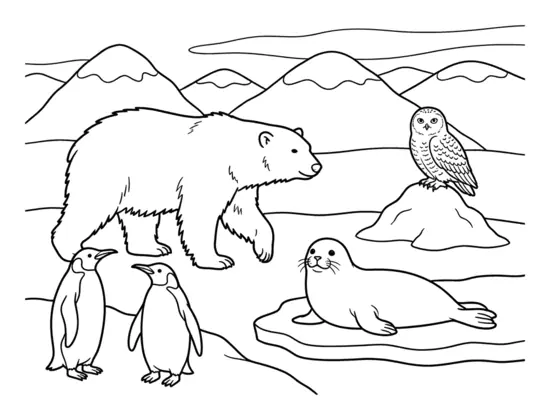
Years 1–2 · AnimalsSheet 27
Animals of the Frozen Poles
Years 1–2 · AnimalsSheet 28
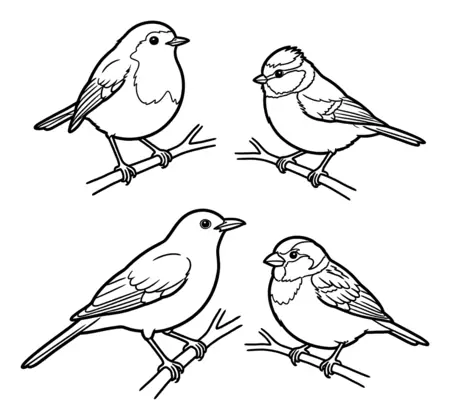
British Garden Birds Spotting Sheet
Years 1–2 · AnimalsSheet 29
Carnivore, Herbivore or Omnivore?
Years 1–2 · AnimalsSheet 30
Label the Parts of a Bee
Years 1–2 · AnimalsSheet 31
Sorting Animal Groups
Years 1–2 · PlantsSheet 39
Deciduous and Evergreen Trees
Educational quiz app · Ages 5-10
More learning in the Owee app
Owee turns topics like this into quizzes for children aged 5 to 10, and a treehouse grows as they learn. No ads, no chat, no strangers.
- Family-friendly
- No ads
- Private
Educational quiz app · Ages 5-10
More learning in the Owee app
Owee turns topics like this into quizzes for children aged 5 to 10, and a treehouse grows as they learn. No ads, no chat, no strangers.
Scan with your phone camera
- Family-friendly
- No ads
- Private