Educational quiz app · Ages 5-10
This is what learning looks like


Educational quiz app · Ages 5-10
This is what learning looks like
No nagging required. Keep the learning going after the worksheet, with every question read aloud and Owee guiding each step.
Scan with your phone camera
- Family-friendly
- No ads
- Private
Geography · Colouring and labelling worksheet
The 8-Point Compass: Free KS2 Geography Worksheet
The eight points of a compass are a core map skill in Key Stage 2 geography. On this free printable, your child labels the eight main points on a compass rose — north, north-east, east, south-east, south, south-west, west and north-west — using a word bank, colours the rose, then answers four short direction questions.
It is designed for ages 7 to 9 (Years 3 and 4) and prints on one sheet of A4. You only need a pencil and some colouring pencils, so it works as a classroom starter, a homework task or a quiet activity at the kitchen table.
What your child is learning
‘use the 8 points of a compass, 4- and 6-figure grid references, symbols and key (including the use of Ordnance Survey maps) to build their knowledge of the United Kingdom and the wider world’
Key stage 2 Geography: Geographical skills and fieldwork, National Curriculum in England. Source and licence
The 8-Point Compass
Free Geography worksheet · Ages 7 to 9
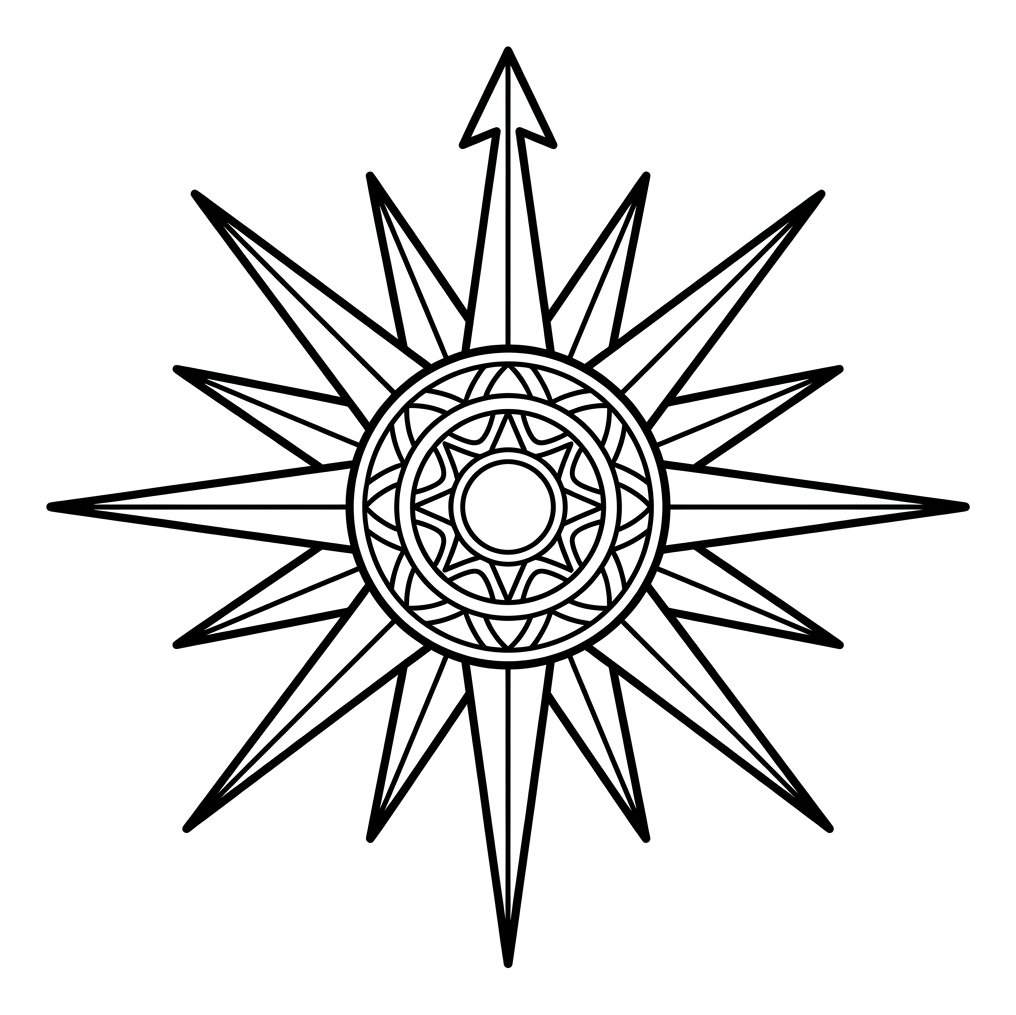
Label and colour the compass
The arm with the arrow points North. Write the direction for each number, using the word bank. Then colour the compass: one colour for the numbered arms and another for the small arms between them.
- 1
- 2
- 3
- 4
- 5
- 6
- 7
- 8
Use the compass
Use your labelled compass to answer each question.
Which direction is opposite North-East?
Which direction is halfway between South and East?
Face North. Make a quarter turn clockwise. Which way do you face now?
Write the short form of North-West.
 The 8-Point CompassSheet 124
Answers: The 8-Point Compass
Sheet 124
- 1. North
- 2. East
- 3. South
- 4. West
- 5. North-East
- 6. South-East
- 7. South-West
- 8. North-West
- Which direction is opposite North-East? — South-West
- Which direction is halfway between South and East? — South-East
- Face North. Make a quarter turn clockwise. Which way do you face now? — East
- Write the short form of North-West. — NW
For grown-ups. Free worksheets and the Owee quiz app at owee.world
Answer key
- 1. North
- 2. East
- 3. South
- 4. West
- 5. North-East
- 6. South-East
- 7. South-West
- 8. North-West
- Which direction is opposite North-East? — South-West
- Which direction is halfway between South and East? — South-East
- Face North. Make a quarter turn clockwise. Which way do you face now? — East
- Write the short form of North-West. — NW
Why the eight-point compass matters in KS2
In Key Stage 1, children use the four main compass directions: north, south, east and west. The Key Stage 2 curriculum asks them to use all eight points of a compass. The four extra points — north-east, south-east, south-west and north-west — sit halfway between the main ones, so children can describe a direction more exactly. These are called the ordinal points. Many schools teach them in Year 3 or 4, and they lead on to grid references, map symbols and fieldwork later in Key Stage 2.
How to use this worksheet at home or in class
Start with the arm that has an arrow: it points north and is number 1. Numbers 1 to 4 are the four main points and numbers 5 to 8 are the in-between points, so your child can work in two steps. Say each direction aloud while pointing to its arm. Colouring the numbered arms in one colour and the short arms in another makes the eight main points stand out. The questions then ask your child to use the compass, by finding an opposite and making a quarter turn.
Helpful ways to remember the order
A traditional mnemonic for reading clockwise from the top is “Naughty Elephants Squirt Water” — North, East, South, West. A common mistake is to mix up east and west. On a map with north at the top, west is on the left and east is on the right, and W and E spell “we” when read across the compass from left to right. Another common mistake is writing “east-north”: the in-between points always say north or south first, so it is north-east, south-east, south-west and north-west. The short forms follow the same rule (NE, SE, SW, NW). Knowing that the sun rises roughly in the east and sets roughly in the west gives the idea a real-world anchor.
Extending the activity
Once your child can name the points, use them for real. Hide an object in a room and give directions to find it (“take three steps north-west”), or use a compass in the garden to find which way your front door faces. On a map of the UK, ask which direction one city is from another: Cardiff is west of London, and Norwich is north-east of London. Short, regular practice like this makes the eight points second nature before grid references come along later in Key Stage 2.
Frequently asked questions
What are the eight points of a compass?
The eight points are north, north-east, east, south-east, south, south-west, west and north-west. Reading clockwise from the top they are abbreviated as N, NE, E, SE, S, SW, W and NW. The four “in-between” points (the ordinal points) sit halfway between the cardinal points of north, east, south and west.
What age or year group is this compass worksheet for?
It is aimed at children aged 7 to 9, which covers Years 3 and 4 (Key Stage 2). The National Curriculum introduces the eight points of a compass in Key Stage 2, and many schools teach them in Year 3 or 4. Older children can use it for revision, and younger children who know north, east, south and west can start with labels 1 to 4.
Is this compass worksheet free to print?
Yes. The worksheet is free to download and print. It fits on a single sheet of A4, so it works well for homework, a classroom starter or learning at home with just a pencil and some colouring pencils.
How can I help my child remember the compass directions?
A popular mnemonic for the four main points read clockwise is “Naughty Elephants Squirt Water” for North, East, South, West. The in-between points join their two neighbours, always saying north or south first – for example north-east and south-west. Pointing to each arm on the labelled compass while saying it aloud reinforces the order.
What is the difference between cardinal and ordinal compass points?
The four cardinal points are north, east, south and west. The four ordinal (or intercardinal) points – north-east, south-east, south-west and north-west – lie exactly between them. Together they make up the eight points of a compass that KS2 children are expected to use.
Curriculum links
- Key stage 2 Geography: Geographical skills and fieldwork (statutory): 'use the 8 points of a compass, 4- and 6-figure grid references, symbols and key (including the use of Ordnance Survey maps) to build their knowledge of the United Kingdom and the wider world'
Quoted word for word from Department for Education documents: the National Curriculum in England, the EYFS framework or the RSHE guidance. Contains public sector information licensed under the Open Government Licence v3.0.
Made by The Owee education team. Updated 13/10/2026. Free to print and share.
More geography worksheets
All Year 3 Geography worksheets →
Years 1–2 · Map skillsSheet 89
Compass Directions: North, East, South, West
Years 1–2 · Map skillsSheet 90
Map Symbols and a Key
Years 4–5 · Map skillsSheet 162
Reading a Map: Symbols and a Key
Years 4–5 · EuropeSheet 161
Countries and Capitals of Europe
Years 3–4 · Volcanoes and earthquakesSheet 164
Inside a Volcano
Years 3–4 · Volcanoes and earthquakesSheet 165
Layers of the Earth
Educational quiz app · Ages 5-10
More learning in the Owee app
Owee turns topics like this into quizzes for children aged 5 to 10, and a treehouse grows as they learn. No ads, no chat, no strangers.
- Family-friendly
- No ads
- Private
Educational quiz app · Ages 5-10
More learning in the Owee app
Owee turns topics like this into quizzes for children aged 5 to 10, and a treehouse grows as they learn. No ads, no chat, no strangers.
Scan with your phone camera
- Family-friendly
- No ads
- Private