Educational quiz app · Ages 5-10
This is what learning looks like


Educational quiz app · Ages 5-10
This is what learning looks like
No nagging required. Keep the learning going after the worksheet, with every question read aloud and Owee guiding each step.
Scan with your phone camera
- Family-friendly
- No ads
- Private
Maths · Colouring and writing worksheet
3D Shapes Around Us: Free KS1 Maths Worksheet
3D shapes are all around us, from the ball in the garden to the tin of beans in the cupboard. This free printable worksheet helps children aged 6 to 7 recognise and name five common solid shapes: the cube, cuboid, sphere, cylinder and cone.
It pairs a colour-in picture of a toy box with short matching tasks, so children connect the maths vocabulary to objects they handle every day. Print it on a single sheet of A4 for a quick KS1 maths starter, a homework task or a calm rainy-day activity.
What your child is learning
‘recognise and name common 2-D and 3-D shapes’
Year 1 Maths: Geometry – properties of shapes, National Curriculum in England. Source and licence
3D Shapes Around Us
Free Maths worksheet · Ages 6 to 7
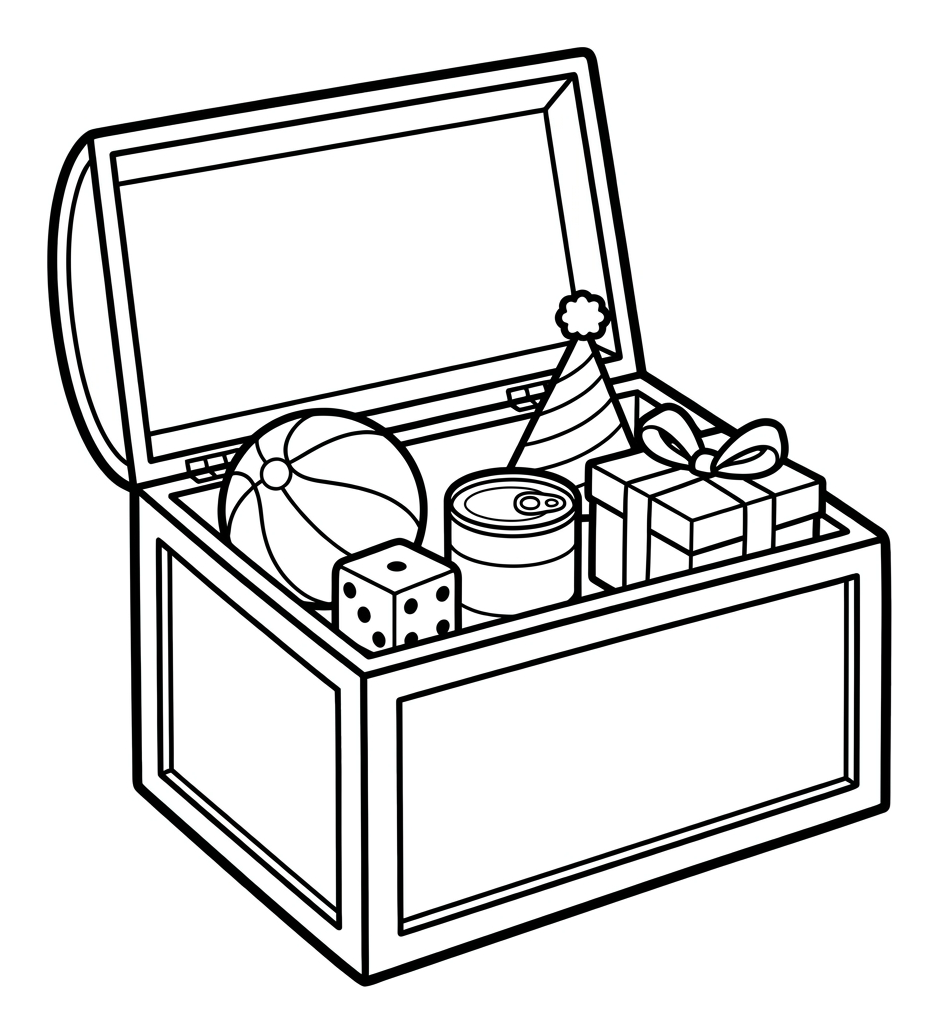
Colour the toy box
Colour the toy box and the five things inside it. Use a different colour for each thing.
Name the 3D shapes
Look at each object in the picture. Write its 3D shape name. Use the word bank to help you.
What 3D shape is the ball?
What 3D shape is the dice?
What 3D shape is the tin can?
What 3D shape is the party hat?
What 3D shape is the wrapped present?
 3D Shapes Around UsSheet 11
Answers: 3D Shapes Around Us
Sheet 11
- What 3D shape is the ball? — sphere
- What 3D shape is the dice? — cube
- What 3D shape is the tin can? — cylinder
- What 3D shape is the party hat? — cone
- What 3D shape is the wrapped present? — cuboid
For grown-ups. Free worksheets and the Owee quiz app at owee.world
Answer key
- What 3D shape is the ball? — sphere
- What 3D shape is the dice? — cube
- What 3D shape is the tin can? — cylinder
- What 3D shape is the party hat? — cone
- What 3D shape is the wrapped present? — cuboid
What your child practises
This worksheet focuses on the Year 1 geometry skill of recognising and naming common 3D shapes. Children look at five everyday objects in the picture, a ball, a dice, a tin can, a party hat and a wrapped present, and match each one to the correct shape name. Naming shapes in real objects is a deliberate step beyond simply pointing at a diagram in a textbook: it helps children understand that a sphere is not just a circle on a page but the actual shape of a ball, an orange or a marble. By colouring and then matching, children link the mathematical word to a familiar, physical object, which makes the vocabulary far easier to remember.
The shapes to know at KS1
Five solid shapes are introduced here. A cube has six square faces all the same size, like a dice or a sugar cube. A cuboid also has six flat faces, but they are rectangles and not all the same size, like a cereal box or a wrapped present (a cube is in fact a special kind of cuboid). A sphere is perfectly round all over, like a ball or an orange. A cylinder has two flat circular ends and a curved side, like a tin can or a kitchen-roll tube. A cone has one flat circular face and a curved surface that rises to a point, like a party hat or an ice-cream cornet.
How to use this sheet at home or in class
Start with the colouring task to settle your child and give them time to look closely at each object. As they colour, talk about what each one feels like: is it round all over, or does it have flat sides and corners? Then move on to the writing task, where they choose the right shape name from the word bank for each object. Afterwards, ask a bonus question: what shape is the toy box itself? (It is a cuboid too.) To deepen the learning, go on a quick shape hunt around the room: a tin in the cupboard is a cylinder, a box of tissues is a cuboid, a ball is a sphere. Encourage your child to use the full shape names rather than everyday words, as this builds the precise vocabulary expected in KS1 maths.
Common mix-ups to watch for
At this age children often confuse 2D and 3D names, calling a sphere a circle or a cube a square. A gentle way to explain the difference is that 2D shapes are flat like a drawing on paper, while 3D shapes are solid and you can pick them up. Another frequent slip is muddling the cube and the cuboid: remind your child that a cube has all square faces of the same size, whereas a cuboid is more like a box that is longer in one direction. The cylinder and cone can also be confused, so point out that a cone narrows to a single point while a cylinder stays the same width from top to bottom.
Frequently asked questions
What 3D shapes do children learn in KS1?
In Key Stage 1, children are introduced to common 3D shapes including the cube, cuboid, sphere, cylinder, cone and pyramid. In Year 1 they recognise and name these shapes, and in Year 2 they go on to describe their faces, edges and vertices. This worksheet covers naming five of the most familiar 3D shapes for ages 6 to 7.
What is the difference between a cube and a cuboid?
A cube has six faces that are all squares of exactly the same size, like a dice. A cuboid also has six faces, but they are rectangles and not all the same, like a cereal box or a shoebox. Because a square is a special rectangle, a cube is actually a special type of cuboid, which is why the National Curriculum lists cubes as a kind of cuboid.
Is this 3D shapes worksheet free to print?
Yes. This worksheet is completely free to download and print. It is designed to fit on a single sheet of A4 in portrait orientation, so you can print it at home or in the classroom with no special setup or subscription required.
How is a 3D shape different from a 2D shape?
A 2D (two-dimensional) shape is flat, like a circle or a square drawn on paper. A 3D (three-dimensional) shape is solid and takes up space, so you can pick it up and hold it, like a ball or a box. Helping children handle real objects while naming them is one of the best ways to make this difference clear.
What age is this 3D shapes worksheet for?
It is aimed at children aged 6 to 7, which is Year 1 to Year 2 in the English school system (Key Stage 1). The vocabulary and tasks match the Year 1 geometry objective of recognising and naming common 3D shapes, and it also makes a useful gentle revision sheet for younger Year 2 children.
Curriculum links
- Year 1 Maths: Geometry – properties of shapes (statutory): 'recognise and name common 2-D and 3-D shapes'
Quoted word for word from Department for Education documents: the National Curriculum in England, the EYFS framework or the RSHE guidance. Contains public sector information licensed under the Open Government Licence v3.0.
Made by The Owee education team. Updated 13/10/2026. Free to print and share.
More maths worksheets
All Year 1 Maths worksheets →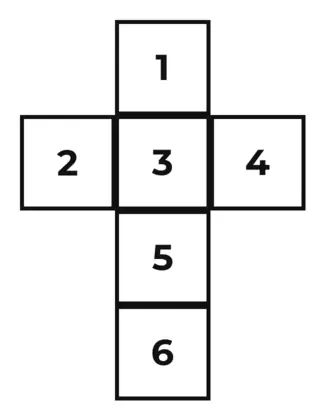
Years 5–6 · 3D shapesSheet 178
Net of a Cube
Years 2–3 · 3D shapesSheet 56
Robot 3D Shapes: Faces, Edges and Vertices
Reception–Year 1 · Addition and subtractionSheet 12
Adding to 10: Ducks on the Pond
Years 2–4 · SymmetrySheet 63
Butterfly Lines of Symmetry
Years 1–2 · CountingSheet 14
Count in 2s: Pairs of Wellies
Reception–Year 1 · CountingSheet 1
Count the Minibeasts
Educational quiz app · Ages 5-10
More learning in the Owee app
Owee turns topics like this into quizzes for children aged 5 to 10, and a treehouse grows as they learn. No ads, no chat, no strangers.
- Family-friendly
- No ads
- Private
Educational quiz app · Ages 5-10
More learning in the Owee app
Owee turns topics like this into quizzes for children aged 5 to 10, and a treehouse grows as they learn. No ads, no chat, no strangers.
Scan with your phone camera
- Family-friendly
- No ads
- Private