Educational quiz app · Ages 5-10
This is what learning looks like


Educational quiz app · Ages 5-10
This is what learning looks like
No nagging required. Keep the learning going after the worksheet, with every question read aloud and Owee guiding each step.
Scan with your phone camera
- Family-friendly
- No ads
- Private
Maths · Colouring and naming worksheet
Naming 2D Shapes: Free KS1 Maths Colouring and Naming Worksheet
This free, printable 2D shapes worksheet helps children aged 5 to 7 recognise and name six common flat shapes: the circle, square, triangle, rectangle, pentagon and hexagon. Children colour each shape in, write the name of each numbered shape, then count the sides and corners on five of them.
It is completely free to print, use and share, at home or in the classroom. Just hit print, or save it as a PDF.
What your child is learning
‘identify and describe the properties of 2-D shapes, including the number of sides, and line symmetry in a vertical line’
Year 2 Maths: Geometry – properties of shapes, National Curriculum in England. Source and licence
Naming 2D Shapes
Free Maths worksheet · Ages 5 to 7
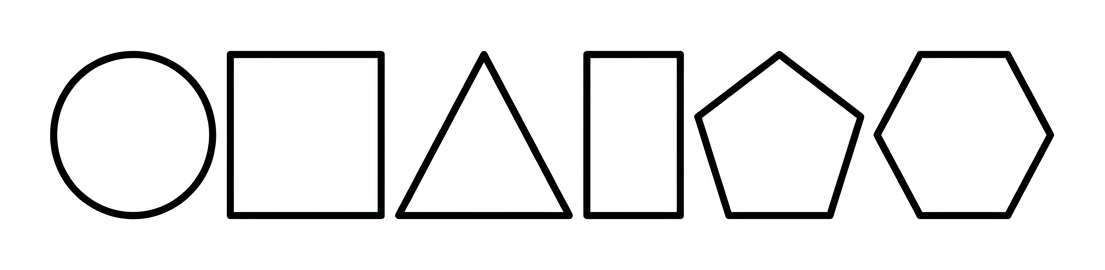
Colour the shapes
Colour each shape a different colour.
Name the shapes
Write the name of each numbered shape. Use the word bank to help you.
- 1
- 2
- 3
- 4
- 5
- 6
Count the sides and corners
Count carefully. Touch each side or corner as you count. Write the number in the box.
- How many corners does shape 1 have?
- How many sides does shape 3 have?
- How many corners does shape 4 have?
- How many sides does shape 5 have?
- How many corners does shape 6 have?
 Naming 2D ShapesSheet 55
Answers: Naming 2D Shapes
Sheet 55
- 1. circle
- 2. square
- 3. triangle
- 4. rectangle
- 5. pentagon
- 6. hexagon
- How many corners does shape 1 have? — 0 (a circle has no corners)
- How many sides does shape 3 have? — 3
- How many corners does shape 4 have? — 4
- How many sides does shape 5 have? — 5
- How many corners does shape 6 have? — 6
For grown-ups. Free worksheets and the Owee quiz app at owee.world
Answer key
- 1. circle
- 2. square
- 3. triangle
- 4. rectangle
- 5. pentagon
- 6. hexagon
- How many corners does shape 1 have? — 0 (a circle has no corners)
- How many sides does shape 3 have? — 3
- How many corners does shape 4 have? — 4
- How many sides does shape 5 have? — 5
- How many corners does shape 6 have? — 6
What is on the worksheet
Six clear line drawings of common 2D shapes, set out in a row: a circle, a square, a triangle, a rectangle, a pentagon and a hexagon. Each shape has a bold, even outline and a number from 1 to 6, so it is easy to colour and easy to talk about (‘What is shape 4?’).
Underneath, there is a word bank of the six shape names to support early readers, a numbered line to write each name, and five short questions with boxes to record how many sides or corners a shape has. Notice that the rectangle stands upright, taller than it is wide — a deliberate nudge, because many children only recognise rectangles lying on their long side.
How to use it at home or in the classroom
Print the worksheet, or open it on a tablet and print from there. First, let your child colour the shapes however they like, which is a relaxed, low-pressure way in. You might suggest a different colour for each shape so they are easy to tell apart.
Then look at the shapes together. Ask your child to find each numbered shape and write its name using the word bank. For the counting questions, put a small dot on each corner as it is counted, so none is missed or counted twice. For younger children, you can read the word bank together and let them match the words. For a class, it works well as a starter activity or as part of a topic on shape and geometry.
What your child will learn
By the end of the activity, your child should be able to recognise and name six common 2D shapes, and begin to describe them by their properties. They will practise counting the sides (the straight edges) and the corners (where two sides meet, sometimes called vertices) of each shape.
Along the way, children notice that a triangle has 3 sides and 3 corners, a square and a rectangle each have 4, a pentagon has 5 and a hexagon has 6, while a circle has no straight sides and no corners. A useful pattern to point out: for every straight-sided shape here, the number of sides and the number of corners is the same. Recognising and describing shapes is one of the first geometry topics in primary school, and a strong foundation for later work on symmetry, angles and 3D shapes.
A note for teachers
This worksheet supports the Key Stage 1 mathematics programme of study for geometry. It works as a quick check of whether pupils can recognise and name common 2D shapes, and, for Year 2, whether they can describe them by their number of sides and corners. It pairs well with a feely bag, shape hunt or sorting activity.
There is no log-in, no watermark and no catch. You are welcome to print copies for your class and to link to this page from your school website or newsletter.
Frequently asked questions
What are the names of common 2D shapes for KS1?
The 2D shapes most children learn first are the circle, square, triangle and rectangle, followed by the pentagon (5 sides) and hexagon (6 sides). This worksheet covers all six, with their sides and corners to count.
What is the difference between a side and a corner?
A side is one of the straight edges of a shape, and a corner is the point where two sides meet (older children may hear this called a vertex). For example, a triangle has 3 sides and 3 corners, while a circle has no corners at all. Some schools describe a circle as having one curved side; others say it has no sides. Either is fine at this age, as long as your child knows it has no straight sides and no corners.
What age or year group is this worksheet for?
It is designed for children aged 5 to 7, which is Years 1 and 2 (Key Stage 1) in England. Naming the shapes suits Year 1, while counting sides and corners matches the Year 2 objective on describing shape properties.
Is this 2D shapes worksheet free to print and share?
Yes. It is completely free to print, use at home or in class, and share. There is no sign-up and no watermark. You are welcome to link to this page from a school website or newsletter.
How do I print or save the worksheet?
Press the Print button on this page, or use your browser's print option. To keep a copy, choose 'Save as PDF' as the destination in the print dialog.
Curriculum links
- Year 2 Maths: Geometry – properties of shapes (statutory): 'identify and describe the properties of 2-D shapes, including the number of sides, and line symmetry in a vertical line'
- KS1 Year 2 Geometry: properties of shapes (statutory): 'compare and sort common 2-D and 3-D shapes and everyday objects'
Quoted word for word from Department for Education documents: the National Curriculum in England, the EYFS framework or the RSHE guidance. Contains public sector information licensed under the Open Government Licence v3.0.
Made by The Owee education team. Updated 13/10/2026. Free to print and share.
More maths worksheets
All Year 2 Maths worksheets →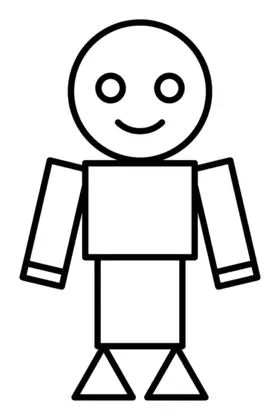
Reception–Year 1 · 2D shapesSheet 10
Naming 2D Shapes: Shape Robot
Years 1–2 · 3D shapesSheet 11
3D Shapes Around Us
Reception–Year 1 · Addition and subtractionSheet 12
Adding to 10: Ducks on the Pond
Years 2–4 · SymmetrySheet 63
Butterfly Lines of Symmetry
Years 1–2 · CountingSheet 14
Count in 2s: Pairs of Wellies
Reception–Year 1 · CountingSheet 1
Count the Minibeasts
Educational quiz app · Ages 5-10
More learning in the Owee app
Owee turns topics like this into quizzes for children aged 5 to 10, and a treehouse grows as they learn. No ads, no chat, no strangers.
- Family-friendly
- No ads
- Private
Educational quiz app · Ages 5-10
More learning in the Owee app
Owee turns topics like this into quizzes for children aged 5 to 10, and a treehouse grows as they learn. No ads, no chat, no strangers.
Scan with your phone camera
- Family-friendly
- No ads
- Private